
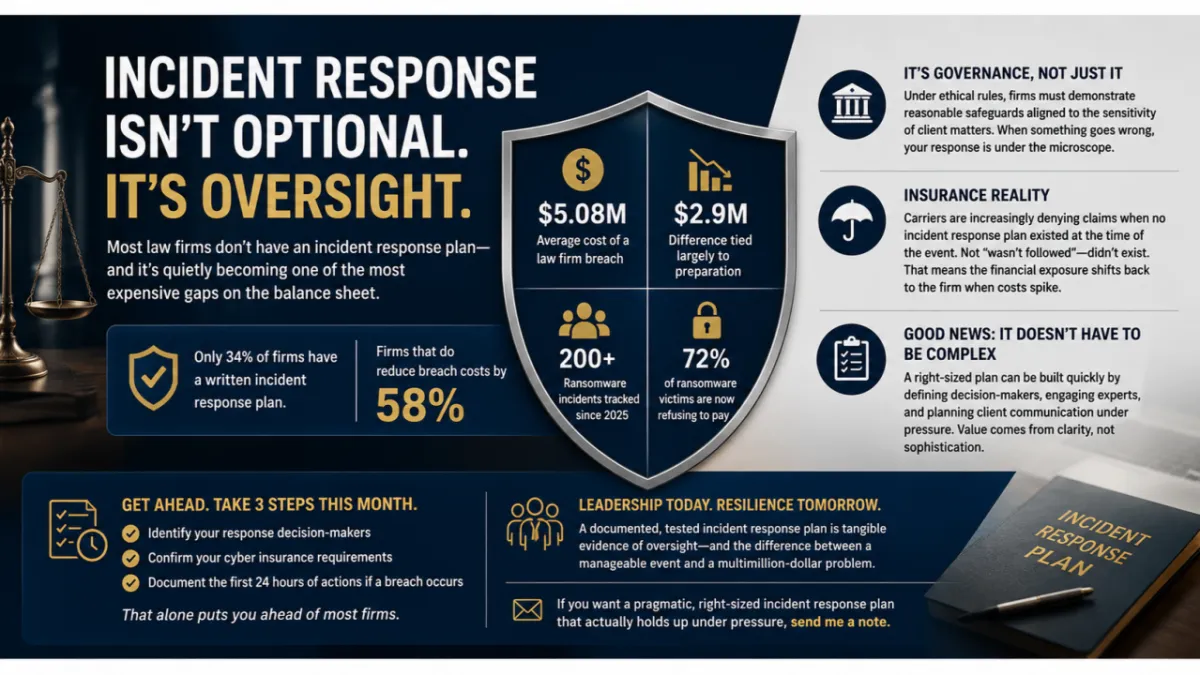
Cybersecurity Leadership Beyond IT: A Boardroom Priority
Risk Management, Cybersecurity Leadership, Law Firm Stewardship
If Cybersecurity Still Sits in IT, You May Have a Leadership Problem
When cybersecurity is treated as an IT project rather than a leadership responsibility, organizations overlook a core duty: stewardship of client data, reputation, and long‑term value.
Cybersecurity as Stewardship and Governance
For businesses and law firms alike, Risk Management is no longer just about insurance and incident response. It is about Law Firm Stewardship and organizational guardianship. Framing cybersecurity as a stewardship duty forces senior leaders to own the Governance Program—setting expectations, allocating resources, and measuring outcomes, not merely approving tools.
Better Decisions, Stronger Client Trust
When Cybersecurity Leadership sits with the C‑suite and managing partners, decisions shift from “What can IT support?” to “What level of risk are we, as stewards, willing to accept on behalf of our clients?” That mindset leads to clearer priorities, faster approvals for protective measures, and more coherent crisis response.
Clients increasingly ask how their information is protected. Treating cybersecurity as leadership stewardship directly enhances Client Trust: it demonstrates that protecting confidential data is embedded in strategy, not left to a help desk ticket.
Ethical and Professional Obligations
For professional services and law firms, cybersecurity is inseparable from ethical obligations—confidentiality, competence, and diligence. A mature governance approach aligns policies, training, and technology with these ethical and professional obligations, making clear that safeguarding information is part of what it means to practice responsibly.
